Skip to content
Home Gallery Member’s Corner Alumni Magazine
Opportunities
Register FAQ Contact

5 Lessons from Dr Ujuka Iloabuchi’s Presentation

What does it actually take to conceive, and when should a couple seek help?

On Saturday, March 28, 2026, Dr Ujuka Iloabuchi, Class of 2002, addressed this question during DIAA’s monthly Knowledge Sharing Series.

Her presentation, “Fertility Myths and Facts: Understanding Male and Female Factors”, explained the biology behind conception and challenged familiar assumptions about infertility.

Here are five lessons from the presentation.

1. Fertility Investigations Should Involve Both Partners

Black couple in a fertility consultation, doctor seen from behind

Pregnancy depends on several things working together. An egg must be released, healthy sperm must reach it, and the resulting embryo must be able to implant and develop in the womb.

Dr Iloabuchi explained that difficulties can arise in either partner, in both partners, or remain unexplained after investigation.

For women, possible causes include problems with ovulation, blocked fallopian tubes and conditions affecting the womb. For men, sperm count, movement and shape all matter.

This is why repeatedly investigating the woman while leaving her partner unassessed can delay useful answers. Both partners should be willing to seek care.

The purpose is to understand what is happening and decide what to do together. Blame does nothing to improve the chances of conception.

2. Know Your Own Cycle Rather Than Relying on an Assumed Calendar

Black woman recording dates in a menstrual cycle journal

Frequent intercourse does not guarantee pregnancy. Timing matters too.

Dr Iloabuchi explained that the first day of full menstrual flow counts as day one of the cycle. However, women do not all have the same cycle length, and ovulation does not always happen on day 14.

She described a patient with polycystic ovary syndrome whose cycles were longer than the familiar 28-day pattern. The couple had been timing intercourse around an assumed schedule that did not match when she was ovulating.

After reviewing her menstrual calendar and investigating further, Dr Iloabuchi advised a change in timing. She reported that the couple subsequently conceived.

The lesson is to pay attention to your own pattern. Menstrual tracking provides useful information for a consultation, especially when cycles are irregular or unusually long.

A calendar can help identify questions. A clinician can help interpret the answers.

3. Sexual Difficulties Need Honest Conversations and Appropriate Care

Black couple talking supportively together at home

Some obstacles to conception are difficult to discuss even between partners.

Dr Iloabuchi spoke about reduced sexual desire, erectile difficulties and problems with ejaculation. Embarrassment, cultural expectations or treating sex as a forbidden subject can make these issues harder to acknowledge.

She described situations in her practice where a woman had undergone investigations but struggled to persuade her partner to seek assessment.

Silence leaves both people without the information they need.

Sexual difficulties can have physical, hormonal, emotional or relationship dimensions. Existing conditions such as diabetes and high blood pressure may also be relevant to sexual health.

An honest conversation can begin the process, followed by confidential medical advice where needed.

Dr Iloabuchi also encouraged couples to preserve affection and connection while trying to conceive. When every intimate moment becomes a test of whether pregnancy will happen, the relationship itself can come under pressure.

4. Seek Help at the Right Time, Even If You Have Conceived Before

Black couple consulting a doctor whose face is not shown

Waiting indefinitely can reduce the time available to investigate a problem and consider treatment.

Dr Iloabuchi explained that the timing of assessment depends particularly on the woman’s age. For couples having regular unprotected intercourse, evaluation is generally recommended after 12 months without pregnancy when the woman is under 35, and after six months when she is 35 or older.

At 40 or older, she advised starting the conversation promptly. Known reproductive problems or irregular cycles can also justify seeking advice sooner.

She highlighted another important point: a previous pregnancy does not guarantee future fertility. A couple who conceived easily before can experience difficulty later.

A primary care doctor or gynaecologist can help begin the assessment. Depending on the findings, a urologist or a specialist in reproductive medicine may be needed.

Seeking help provides information and options. It does not mean that every couple will require in vitro fertilization (IVF).

5. Build Healthy Habits and Question Promises of Guaranteed Pregnancy

Black couple preparing fresh vegetables together

Dr Iloabuchi challenged claims that particular sexual positions, rubbing a pregnant woman’s belly or eating animal genitalia can improve the chances of conception.

She also questioned products and supplements promoted as guarantees of pregnancy.

Her emphasis was on caring for the body: eating well, exercising, avoiding tobacco, addressing excessive alcohol use and managing existing health conditions.

These habits support health, but they cannot guarantee pregnancy or replace an investigation when one is needed.

She recommended preparing for pregnancy, including taking an appropriate prenatal supplement containing folic acid. Folic acid helps reduce the risk of certain birth defects; it should not be mistaken for an infertility cure.

She also acknowledged how isolating fertility difficulties can become. Exercise, walks, reconnecting as a couple and other ways of managing stress may support wellbeing during a demanding period.

Couples need reliable information, appropriate care and room to support each other without additional pressure.

Memorable Quote from the Presentation

“You address it together as a couple and do what needs to be done.”

Share this story on:

Member’s Corner: Kalu Ogbonnaya Ukwa

Member’s Corner takes a closer look at Dority International Alumni Association members. This month, October 2026, features Kalu Ogbonnaya Ukwa from Class of 2001.

Kalu Ogbonnaya Ukwa

Kalu Ogbonnaya Ukwa is an information technology professional, systems modeller and development-planning consultant whose career spans software development, information systems and public policy.

A 2001 graduate of Dority International Secondary School, he earned a B.Sc. in Information Systems, specialising in Security and Assurance, from the American University of Nigeria in 2009.

In 2010, he became Managing Partner and Chief Executive Officer of HIT-D-WAVE Technology Services Limited, leading technology projects for universities and government institutions.

His work later expanded into development planning. As a Facilitator, IT Expert and Lead Consultant with the Office of the Senior Special Assistant to the President on Sustainable Development Goals, he contributed to Nigeria’s Integrated Sustainable Development Goals (iSDG) model.

In 2020, he joined the Technical Working Group tasked with developing the macroeconomic framework for the Medium-Term National Development Plan 2021–2025 and Nigeria Agenda 2050.

Since 2020, he has worked with the United Nations Development Programme on needs assessments, costing and long-term state development plans, including planning work in Ondo, Zamfara and Ebonyi.

His recent technology projects include federal ICT infrastructure assignments and the National Water Information System.

Across these roles, he has focused on using technology, data and systems thinking to address institutional and development challenges.

What drew you from computer software into the world of economic and development planning?

I wouldn’t say I was totally drawn away but let me provide a little bit of context. I was one of the lead consultants that prepared Nigeria’s Needs Assessment report which was instrumental in Paris Club debt relief negotiations.

Following my success on that assignment in about 200 Local Governments in the North, I was again called upon when Nigeria became one of the early adopters of the Sustainable Development Goals (SDGs).

The Millenium Development Goals (MDGs) was only focused on 8 sectors while the SDGs are holistic and all encompassing (17 Goals cutting across all sectors).

In figuring out how best to implement the SDGs, we stumbled upon a US-based firm, the Millennium Institute, that had implemented the SDGs using the System Dynamics Thinking and Modelling Approach and partnered with them to domesticate the model for Nigeria at both the federal and national Levels.

Adapting and domesticating the model required becoming knowledgeable in all aspects of development and planning for implementing the model’s structural and logical components.

The adapted and domesticated model – The Integrated Sustainable Development Goals (iSDG) Model promotes coherent planning within the complex SDG system.

This exercise at the federal level gave birth to the Nigeria iSDG Report – “Achieving the SDGs in Nigeria: Pathways and Policy Options” which was presented by the late President Buhari at the UNGA 2019.

We are currently replicating same at the Sub-National level with 13 States covered so far out of which I have personally led the process in three states—Ondo, Zamfara and Ebonyi—and co-authored their long-term development plans.

From your experience, what are the biggest challenges in obtaining reliable Nigerian data for long-term planning?

I would say the biggest challenges as not primarily being the absence of data, but our attitude towards data, the difficulty of getting data that is consistent, timely, sufficiently detailed, and trusted enough to support long-term decisions.

We generally view data as an instrument for indictment rather than a prerequisite for planning or development.

From experience, I would highlight these major broad challenges: Data gaps and incomplete coverage, weak administrative data systems, inconsistencies between data sources, limited capacity and funding, timeliness, data coordination and interoperability, data verification and public trust, political and institutional continuity.

How do you turn broad development goals into measurable targets that can be tested in a computer model?

The SDGs addressed this issue from its conception. To turn broad development goals into measurable targets that can be tested in a computer model, you need to break the broad goal into specific, measurable, and quantifiable targets/indicators.

This question mirrors exactly the endemic problem that had plagued Nigeria’s development plans, planning and approach over the years, most recently the Economic Recovery and Growth Plan 2017-2020 which only outlined broad development goals.

Development planning begins with an honest empirical assessment of reality (especially the economy and population) backed by data.

With our current approach using the System Dynamics Modelling approach, historical data is fed into the model (after the structural and logical components have been implemented) for calibration.

A properly calibrated model will have the model simulation output matching the data trend and then ready for future projections.

Once the present reality is carefully documented, we then engage in a process called Quantification – which is basically the exercise of assigning actual target values to the various development targets and their indicators.

The SDGs have 17 Goals, 169 targets and 231 unique indicators. In this regard, the Quantification exercise required examining the defined SDG targets vis-à-vis their probability of being realistically achieved within the SDG timeframe (2030) and the proposed development plan timeframe.

Where such target(s) is/are deemed unachievable in any or both scenarios, a new target is then adopted for the development plan scenario/timeframe only.

Once the quantification exercise is done, the target values are then fed into the model for a simulation run to fill in the gaps between the present reality and defined targets.

The proper analysis and translation of the simulation results between the base year and target plan year births the development plan (including policy options and costing).

Broad goal → Specific outcome → Indicator → Baseline → Target → Variables → Computer simulation/testing.

What did your work on the Nigeria Integrated Sustainable Development Goals (iSDG) model teach you about tackling issues such as education, health, employment and infrastructure together rather than in isolation?

An integrated analysis is required to successfully address complex development issues that balance social, economic, and environmental development.

By bringing together the three dimensions of sustainable development into one framework, the iSDG model enables broad, cross-sector and long-term analyses of the impacts of alternative policies

Policy design and planning for the SDGs presents a huge challenge due in part to the interconnected and complex nature of the 17 goals.

Actions to achieve progress in one SDG sector may cause underachievement or failure in another. Similarly, a successful SDG initiative in one sector might create synergies for improvements in another.

The SDGs constitute a complex system characterized by interwoven feedback loops, lengthy time lags between cause and effect, and non-linearities that are often unrecognized.

The model articulates cross-sectoral linkages between SDGs that constitute a meshwork of interconnected feedback loops.

Simulating the model provides the user with tools to test the impact of potential policies across all the SDGs. Such a policy impact assessment includes side effects on non-target areas of policies.

Depending on whether these side effects are desirable or not they constitute synergies or trade-offs. The model simulates the medium- and long-term consequences of alternative policies.

Hence, it allows for easy comparison to reference scenarios, so as to serve as a tool in consensus building and policy debate.

It also traces the trends beyond the SDGs’ time span of 2030. The iSDG model is especially useful both in the early stages of policy design, to support scenario exploration, and in its advanced stage, when specific interventions designed for various sectors can be jointly simulated to assess their combined effect and the emerging synergies.

What was the biggest challenge in turning Ebonyi State’s needs and aspirations into a practical ten-year development plan?

The biggest challenge remains data. Development planning begins primarily with population and Gross Domestic Product data. Unfortunately, in Nigeria, population figures have remained projections (last official census in 2006) and GDP data measured intermittently.

And with economic data, there’s also the complex issue with government expenditures where figures exist as budgeted, approved and released and data insufficiently tracked at the three levels.

Nigeria has produced many ambitious development plans. What makes the difference between a plan that shapes development and one that ends up on a shelf?

Nigeria has indeed produced several flawed plan documents because they contain broad development goals without defined targets. Beyond having quantified development targets, another key factor for success is ownership at all levels and political willpower for implementation.

The difference is not usually the quality of the document itself; it is the strength of the implementation system behind it. A development plan shapes national development when it moves from policy intention to funded, measurable and accountable action.

Why is good information infrastructure important to how government institutions make decisions and deliver services?

Planning/decision making can only be effective and efficient if it’s based on empirical data/information. Having a good information infrastructure is critical to ensure that data and statistics are captured accordingly for periodic review, assessment and informed decision making.

Good information infrastructure provides the right information, to the right people, at the right time, enabling government institutions to make sound decisions, improve efficiency, and deliver better services to citizens.

What do organizations often misunderstand about digital transformation when they focus mainly on buying new hardware or software?

Hardware and software only make up one part of any digital transformation endeavour. The larger critical component is human capacity. The issue has always been neglecting the human capacity component simply because it is intangible and not a viable means for expending funds.

In reality, digital transformation is mainly about changing how people, processes, and technology work together to improve the organization – it is a business and organizational change enabled by technology.

Which teacher, classmate, activity or experience at Dority had the greatest influence on the person you became?

IELC and DISS have undoubtedly had a significant impact on the man and professional I have become.

I was actually somewhat a problem child back then as I was hellbent on proving that excelling in classroom assignments, tests and exams wasn’t a true test of knowledge and intelligence.

However, I remain particularly grateful to Mr. Moses Ineh, Mr. Bright Adawisi, Mrs. Zovannah Onumah for seeing beyond my recalcitrant behavior.

I would also like to mention Mr. Alpha Iwuoha and now Mrs. Martha Ineh Moses, they too went the extra mile to nurture the attributes that have made me stand out.

Also, I would say Urenna Onyewuchi who at some point had the extra task of writing homework assignments in a special book delivered directly to whomever showed up to pick me.

And for activity, I would say soccer. Interestingly, I still play and enjoy goalkeeping. Remarkably, the American University of Nigeria has a football team named in my honour.

What advice would you give Dority students and younger alumni interested in technology, data or development work but unsure how to build the career they want?

Passion should always remain the main driving force. Don’t wait until you have everything figured out before you start.

Technology, data, and development are broad fields, so begin by identifying one area that genuinely interests you and build practical skills around it.

Start with the fundamentals, progress gradually with a hands-on approach, then find mentors and build sustainable relationships.

Would you like to be featured in Member’s Corner?

To indicate interest, please fill this short form: Member’s Corner interest form.

It takes less than 2 minutes to complete.

Share this story on:

Who Is at Risk of Kidney Disease?

Amy-Precious Oriowo, author of Amy's Health Desk.
DIAA Alumni Magazine
Amy’s Health Desk
Kidney Health • Week 2

Last episode, we looked at what your kidneys do — and why they matter.

This time, we shift the question. Not “what do kidneys do?” but “could something be putting mine at risk?”

Here’s the important part: knowing your risk doesn’t mean you have kidney disease. It means you know where to pay attention. And that knowledge — simple as it sounds — is often the difference between catching a problem early and discovering it too late.

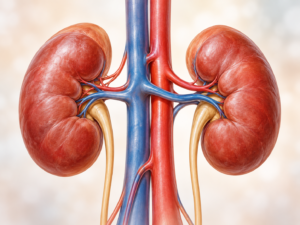
human kidneys

Human kidneys

WHY RISK MATTERS MORE THAN SYMPTOMS

Most people wait for symptoms before they think about their health. With kidneys, that approach doesn’t work.

Early-stage kidney disease is frequently asymptomatic. By the time symptoms appear — swelling, fatigue, changes in urination — a significant amount of kidney function may already be lost.

In the United States, approximately 9 in 10 adults with Chronic Kidney Disease (CKD) are unaware they have it. Although awareness varies between countries, this highlights how easily kidney disease can go undetected.

That’s why we focus on risk factors instead of symptoms. Risk factors tell you where to look before something goes wrong.

You don’t have to wait until you have symptoms to discover that your kidneys need attention.

THE LEADING RISK FACTORS

1. High blood pressure (hypertension)

This is one of the two most common causes of kidney disease.

High blood pressure damages the blood vessels and filtering system inside your kidneys. Over time, this reduces their ability to filter properly. And because damaged kidneys also struggle to regulate blood pressure, the problem feeds itself — blood pressure rises, kidneys weaken further, and the cycle continues.

In Nigeria, high blood pressure is particularly concerning. According to the World Health Organization’s 2025 report, an estimated 32% of Nigerian adults aged 30–79 had hypertension in 2024, and only half of those affected had been diagnosed. Because high blood pressure often causes no noticeable symptoms, regular checks are important.

2. Diabetes

Diabetes is a major cause of chronic kidney disease worldwide. Over time, persistently high blood sugar can damage the kidneys, often without noticeable symptoms.

High blood glucose damages the blood vessels in your kidneys. This is called diabetic kidney disease, and it develops gradually — usually over many years — often without any warning signs.

If you have diabetes, your kidneys need regular monitoring. This isn’t optional. It’s part of managing diabetes properly. You should get tested every year for kidney disease if you have type 2 diabetes, or if you’ve had type 1 diabetes for more than 5 years.

3. Family history of kidney disease

If a close relative — parent, brother, or sister — has kidney disease or kidney failure, your risk is higher.

Some kidney conditions are inherited. Others cluster in families because shared risk factors like high blood pressure and diabetes may be influenced by shared genes, environments and health conditions. Either way, family history is a signal worth taking seriously.

4. Heart disease

Heart disease is an established risk factor for kidney disease.

Heart disease, stroke, and heart failure are closely linked to kidney disease. The reasons overlap: shared risk factors, shared blood vessels, and the fact that a struggling heart reduces blood flow to the kidneys. If you have any form of cardiovascular disease, your kidneys deserve attention too.

5. Previous acute kidney injury

Chronic kidney disease generally involves kidney abnormalities persisting for at least three months, whereas acute kidney injury develops over a much shorter period.

A history of acute kidney injury (AKI) is a risk factor for chronic kidney disease.

If you’ve had an episode of acute kidney injury — a sudden loss of kidney function — your kidneys may be more vulnerable going forward. Previous damage doesn’t always heal completely. And even when it does, the underlying cause may still be present.

6. Obesity

Obesity is an established risk factor that can contribute directly to chronic kidney disease in adults. It contributes to the risk for high blood pressure, type 2 diabetes, and impaired kidney function, all of which often cluster together.

This doesn’t mean everyone with a higher body weight will develop kidney disease. It means weight is one factor among several — and one that can be modified. Managing weight if you have overweight or obesity can help slow the progression of CKD.

7. Smoking

Smoking can worsen kidney disease. In adults with chronic kidney disease, cigarette smoking is associated with an increased risk for CKD progression.

Smoking damages blood vessels throughout the body, including the small vessels in your kidneys. For people with other risk factors, smoking increases kidney and cardiovascular risk.

8. Certain medications

Some medicines — particularly certain painkillers — can harm the kidneys when used frequently or over long periods. The risk depends on the particular medicine, dose, duration and circumstances.

NSAIDs (nonsteroidal anti-inflammatory drugs) can damage your kidneys if you take them for a long time, or lead to acute kidney injury if you take them when you are dehydrated or your blood pressure is low. Ibuprofen and naproxen are NSAIDs.

This is not a reason to avoid all medication. It’s a reason to use medicines thoughtfully, especially if you already have other risk factors. We’ll cover this in detail in Episode 4.

Some traditional medicinal preparations may contain substances harmful to the kidneys. African chronic kidney disease research identifies nephrotoxic herbal remedies as an important concern.

9. Recurrent kidney stones with complications

Kidney stones with complications are listed as a cause of chronic kidney disease in adults.

Kidney stones themselves don’t usually cause permanent kidney damage. But recurrent stones — especially if they obstruct urine flow or lead to repeated infections — can harm kidney function over time.

10. Some infections and other medical conditions

Infections are listed as a cause of CKD. Certain conditions such as recurrent kidney infections, lupus, sickle cell disease and HIV can also affect the kidneys.

Sickle cell disease can damage the kidneys over time. It is especially relevant to health education in Nigeria.

If you’re living with any condition that can affect the kidneys, regular kidney check-ups are important.

TWO COMMON MISCONCEPTIONS ABOUT KIDNEY DISEASE

It is worth clearing up a few myths:

  • Most back pain is caused by problems involving the muscles, joints or spine, rather than the kidneys. However, severe pain in the back or side—particularly when accompanied by fever, blood in the urine or painful urination—may indicate a kidney problem and should be assessed promptly.
  • Having no symptoms does not mean your kidneys are healthy. Early-stage kidney disease usually has no symptoms. This is the most important point in this article.

KNOW YOUR KIDNEY RISK CHECKLIST

Go through this honestly. There are no wrong answers — only information you can act on.

  • ☐ I have high blood pressure (If you don’t know your blood pressure, have it checked)
  • ☐ I have diabetes
  • ☐ A close family member has kidney disease or kidney failure
  • ☐ I have heart disease, heart failure, or have had a stroke
  • ☐ I’ve had acute kidney injury before
  • ☐ I am significantly overweight
  • ☐ I am older than 60 years
  • ☐ I smoke
  • ☐ I frequently use anti-inflammatory painkillers, such as ibuprofen, naproxen or diclofenac, especially without medical advice
  • ☐ I’ve had recurrent kidney stones with complications
  • ☐ I live with a condition that can affect the kidneys (e.g., sickle cell disease, HIV, lupus)
  • ☐ I use herbal remedies

If you have one or more risk factors, it doesn’t mean you have kidney disease. It means you should speak with a healthcare professional about checking your kidneys. This may involve a blood test to assess kidney function and a urine test to look for early signs of kidney damage.

If you ticked none, that’s good news. But it doesn’t guarantee that your kidneys are healthy. Some people develop kidney disease without any obvious risk factors. Your risk for developing CKD also increases with age.

WHAT TO DO WITH THIS INFORMATION

Risk isn’t a diagnosis. It’s a direction.

If you’ve identified risk factors this week, the next step is not panic. It’s action:

  • Check your blood pressure. This is quick, cheap, and available at most pharmacies and health centres.
  • Know your blood sugar status. If you’ve never been tested, consider it.
  • Talk to a healthcare professional about whether you should have kidney function tests.
  • Keep reading this series. Episode 6 will explain exactly what those tests are and what they mean.

THIS EPISODE’S TAKEAWAY

  • You don’t need symptoms to take kidney health seriously. You need awareness of your risk.
  • Knowing your risk factors puts you in a position of control. It tells you where to look, what to monitor, and when to ask for help.

Next episode, we’ll move from risk to action — the everyday habits that protect your kidneys.

A QUICK REFLECTION BEFORE NEXT WEEK

  • Did any item on the checklist surprise you?
  • Do you actually know your blood pressure number?
  • When was the last time you had your blood sugar checked?

If you don’t know the answers, that’s okay. That’s exactly why this series exists.

SOURCES FOR FURTHER READING

  1. KDIGO — 2024 CKD Clinical Practice Guideline. Read source
  2. National Kidney Foundation — Risk Factors for CKD. Read source
  3. NIDDK — CKD Tests and Diagnosis. Read source
  4. World Health Organization (WHO) — Global Report on Hypertension 2025. Read source
  5. Centers for Disease Control and Prevention (CDC) — CKD in the United States, 2026. Read source
  6. Wiley Online Library
  7. American Kidney Fund

Editor’s note: This article is for general health education and does not replace personalised medical advice from a qualified healthcare professional.

Share this story on:

Class of 2001 Reunion

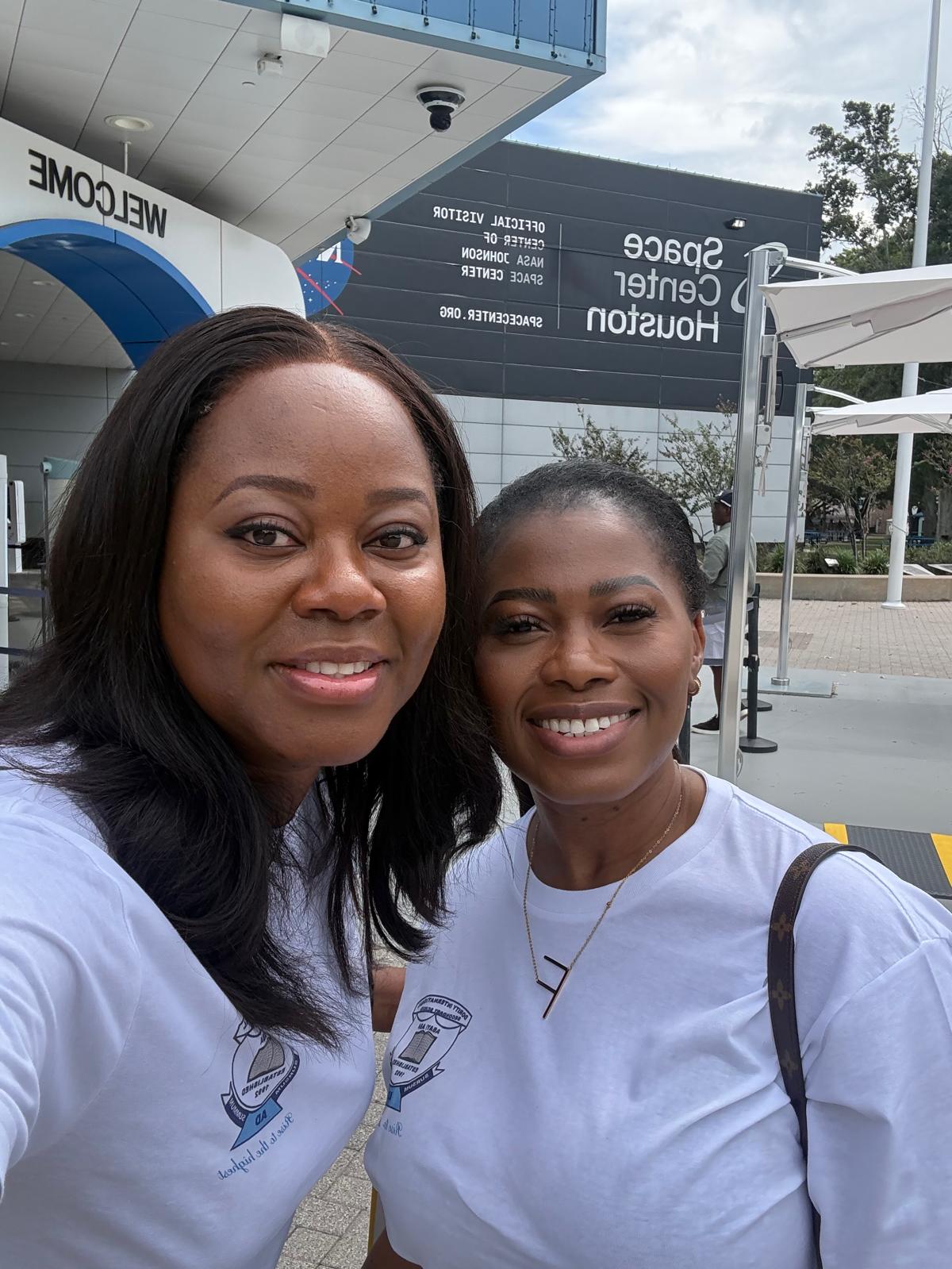
Class of 2001 became the first set to organize a reunion since DIAA was officially registered.

The reunion was held on October 3, 2026, in Houston, USA and in attendance were Emeka Ochu, Ifegwu Eziyi, James Okoronkwo, Urenna Onyewuchi (Vice-President, Diaspora) , Adaugo Ndubisi, Ijeoma Emenike, Eresi Emole (Legal Adviser), Franca Ochuba, Uloma Ogba, Ukaegbu Ben, Ifeanyi Wabara.

They later visited Onuma Agwu Ibe (Class of 1997), Samuel Agwu (Class of 1998), Ngozi Ibe (Class of 1998) and Engr Emole Onumah.

Share this story on: