
Meet Your Kidneys

Most people never think about their kidneys. Not once. Not unless something goes wrong.
And that’s understandable. Your kidneys don’t announce themselves. They don’t growl like an empty stomach or ache like a strained muscle.
They just work — quietly, continuously, every second of every day — while you sleep, eat, work, and go about your life.
But here’s the thing: understanding what your kidneys actually do is the first step toward protecting them. So let’s start there.
What exactly are your kidneys?
You have two kidneys — bean-shaped organs about the size of your fist, sitting on either side of your spine, just below your ribcage.
They’re small. Together, they weigh less than half a kilogram. But what they do is extraordinary.
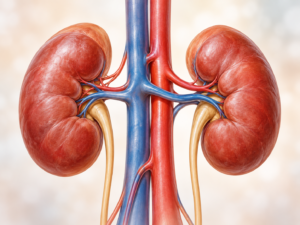
Inside each kidney are roughly a million tiny filtering units called nephrons. Every day, your kidneys filter about 140 litres of blood. That’s the equivalent of filtering a full bathtub of fluid — and then doing it again, and again, all day long.
From that massive volume of blood, your kidneys produce about 1–2 litres of urine. The rest — the water, the salts, the nutrients — gets reabsorbed back into your body. Most filtered water and substances the body still needs are returned to the bloodstream, while wastes and excess water leave as urine.
WHAT DO YOUR KIDNEYS ACTUALLY DO?
Most people think kidneys only make urine. That’s like saying the heart only pumps blood — technically true, but it misses almost everything.
1. They filter waste from your blood.
Normal metabolism produces waste products such as urea and creatinine, while the kidneys also help remove excess acids and many medicines or their breakdown products. Your kidneys remove these from your blood so they don’t build up to dangerous levels. When kidneys fail, this waste accumulates — and that’s what makes people seriously ill.
2. They balance water and electrolytes.
Too much water? Your kidneys get rid of it. Too little? They hold onto it. They do the same with sodium, potassium, calcium, and phosphate — keeping each within the narrow range your body needs to function. This balancing act happens automatically, continuously.
3. They help regulate blood pressure.
Your kidneys control how much fluid stays in your body and release a hormone called renin that influences blood pressure. This is a two-way relationship: high blood pressure damages kidneys, and damaged kidneys make blood pressure harder to control. That’s why kidney health and heart health are deeply connected.
4. They support red blood-cell production.
Your kidneys produce a hormone called erythropoietin, which signals your bone marrow to make red blood cells. When kidneys are damaged, this signal weakens — and anaemia can follow. That’s why some people with kidney disease feel constantly tired.
5. They help keep your bones healthy.
Your kidneys activate vitamin D, which your body needs to absorb calcium. They also balance phosphate. When kidneys don’t work well, bones can become weak and brittle over time.
6. They help regulate acid levels.
Every cell in your body needs the right pH to function. Your kidneys remove excess acid and reabsorb bicarbonate to keep your blood from becoming too acidic.
WHY THIS MATTERS FOR YOUR WHOLE BODY
Your kidneys don’t work in isolation. They’re connected to your heart, your bones, your blood, your blood pressure, and your energy levels.
This means:
- Kidney problems rarely stay kidney problems. They affect the entire body.
- Conditions like diabetes and high blood pressure damage kidneys slowly, often without symptoms.
- Protecting your kidneys is also protecting your heart, your bones, and your long-term health.
WHY KIDNEY DISEASE DEVELOPS QUIETLY
Here’s the uncomfortable truth: you can lose a significant amount of kidney function and feel completely fine.
Kidney disease is often called a “silent” condition because symptoms usually appear only when damage is already advanced. There may be no pain or other obvious warning signs in the early stages. No obvious signal that says, “Something is wrong with your kidneys.”
This is exactly why awareness matters. Not because you should be afraid — but because knowing your risk and getting tested when appropriate can help detect kidney problems earlier, when treatment may help protect kidney function.
WHAT THIS SERIES WILL DO
Over the next couple weeks, we’ll walk through kidney health together:
- What puts your kidneys at risk
- What you can do every day to protect them
- What you should be careful about putting into your body
- Which warning signs deserve attention
- How kidney health is actually tested
- And how to build a personal plan for long-term kidney health
No fear. No jargon. Just clear, practical information you can use.
THIS WEEK’S TAKEAWAY
Your kidneys are working 24/7 — filtering, balancing, regulating, protecting. They don’t ask for attention. But they deserve it.
You don’t need to become an expert in kidney physiology. You just need to understand one thing: your kidneys matter, and protecting them is worth paying attention to.
Next week, we’ll look at who’s most at risk — and whether you might be one of them.
A QUICK REFLECTION BEFORE NEXT WEEK:
- Do you know if you have high blood pressure or diabetes?
- Has anyone in your family had kidney problems?
- When was the last time you had your blood pressure checked?
Hold onto those answers. They’ll matter in the next edition.
Editor’s note: This article is for general health education and does not replace personalised medical advice from a qualified healthcare professional.